 (Image via
We all like to think we are in total control of our money. We work hard for it, we deposit it into the bank, and we make rational decisions about how to spend it. But the truth is, our brains are often playing tricks on us when it comes to cash. Have you ever looked at your bank account at the end of the month and wondered, "Where did it all go?" You didn't buy a new car. You didn't go on a lavish vacation. Yet, the balance is lower than you expected. This phenomenon is often the result of "spending leaks"—tiny, almost invisible drips of money that escape our wallets without us realizing it. These leaks aren't usually caused by bad math; they are caused by psychology. The way we think about, handle, and perceive money has a massive impact on these small habits, and understanding your own "cash psychology" is the first step to plugging the holes in your financial bucket.
The "Pain of Paying" and Digital Money
One of the biggest psychological factors in spending is something behavioral economists call the "pain of paying." Basically, it hurts our brains a little bit to part with money. When you hand over a crisp $20 bill for a sandwich, you physically feel the loss. You see the money leaving your hand. That little twinge of pain acts as a natural brake, making you think twice about the purchase.
However, in our modern world, we have removed almost all the pain. Swiping a credit card, tapping a phone, or clicking "Buy Now" on a website feels like nothing. It is abstract. You don't see the money disappearing; you just get the item you want. This friction-free spending is a major cause of leaks.
Scenario: Imagine Sarah. She stops for coffee every morning.
- With Cash: If she had to count out $6.50 in bills and coins every single day, she would likely start feeling annoyed by how much cash she was losing. She might skip a day or brew coffee at home.
- With a Card: She just taps her card. Beep. Done. She doesn't feel the loss until she sees the credit card statement a month later. By then, she has already spent nearly $200 on coffee. The "pain" was delayed, so it didn't stop her in the moment.
The Denomination Effect: Why Small Bills Vanish
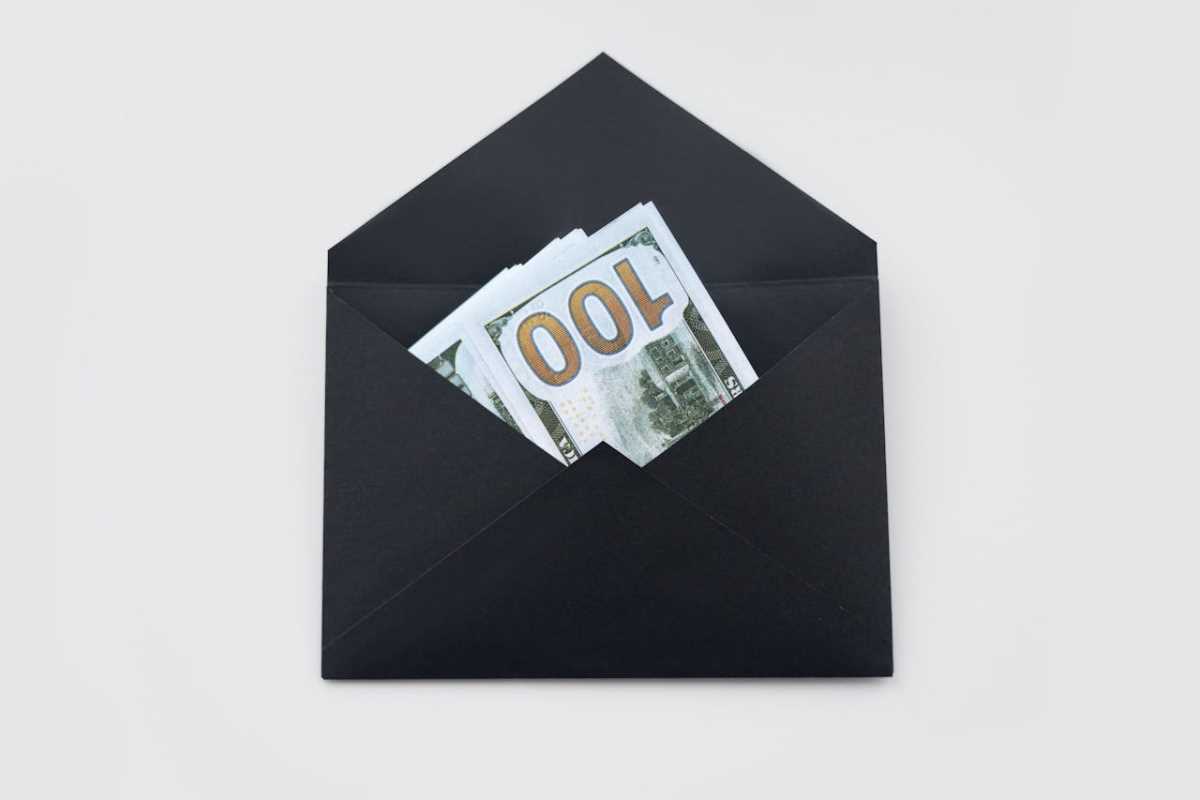
Have you ever noticed that if you have a $100 bill in your wallet, you are reluctant to break it? You treat it like a precious object. But the second you break that $100 bill and get a bunch of $10s and $5s in change, that money seems to evaporate instantly.
This is known as the "Denomination Effect." Psychologically, we view large denominations of money as "savings" or "wealth," while we view smaller denominations as "petty cash" or "spending money." We are much less disciplined with small bills because our brains value them less.
This mindset leads to leaks because we treat small purchases as "freebies." Buying a pack of gum, a soda, or a magazine with a $5 bill feels like it doesn't count. We tell ourselves, "It's just five bucks." But if you do that five times a week, that is $100 a month gone on things you probably didn't even really want.
The Subscription Trap and "Set It and Forget It"
Another major psychological leak comes from the "status quo bias." This is a fancy way of saying that humans are lazy. We prefer to keep things as they are rather than making an effort to change them. Companies know this, which is why the subscription model is so popular.
You sign up for a free trial of a streaming service or a fun app. You enter your credit card info. Then, you forget about it. When the $9.99 charge hits your account next month, you notice it, but you think, "I should cancel that later." But "later" never comes. The effort required to log in, find the cancellation button, and confirm the cancellation feels like too much work compared to the small pain of losing $10.
This is a classic spending leak. You aren't paying for the service because you value it; you are paying for it because you are psychologically resistant to the administrative work of cancelling it. You are literally paying a "lazy tax."
Retail Therapy and Emotional Spending
Sometimes, spending leaks aren't about convenience; they are about feelings. We often use spending as a way to regulate our emotions. This is commonly called "retail therapy."
- The Dopamine Hit: Buying something new releases dopamine in our brains. It gives us a temporary rush of happiness or excitement. If you are having a bad day, that $15 gadget from the clearance aisle might make you feel better for ten minutes.
- The Boredom leak: Often, we spend money just because we are bored. Browsing online stores or wandering through a mall gives us something to do. The spending becomes the entertainment itself.
The problem is that the happiness from these small purchases fades almost instantly, leaving you with less money and often a pile of clutter. This leak is tricky because it feels good in the moment, making it hard to stop.
The "Anchor Price" Illusion
When we shop, our brains look for shortcuts to determine if something is a good deal. We often rely on an "anchor price." This is usually the first price we see.
Scenario: You walk into a store and see a pair of headphones for $200. That seems expensive. Then you see a similar pair next to them on "sale" for $100, marked down from $150. Your brain anchors to the $200 price and the $150 original price. Suddenly, $100 feels like a steal! You buy them, feeling like you saved $50.
In reality, you didn't save $50; you spent $100. If you didn't need headphones to begin with, this is a spending leak disguised as a smart financial decision. Our psychology tricks us into thinking that spending money is the same as saving money, as long as there is a discount involved.
How to Plug the Leaks
Understanding these psychological traps is the first step. The second step is building systems to outsmart your own brain.
1. Reintroduce the Pain of Paying:
Try a "cash-only" week for your discretionary spending (like food, entertainment, and shopping). Go to the ATM on Monday and take out a set amount. When that cash is gone, it's gone. Physically handing over the bills will re-sensitize your brain to the cost of things. You will be amazed at how quickly you stop buying random snacks when you see your stack of bills getting thinner.
2. The 24-Hour Rule:
To combat impulse buying and the dopamine rush, implement a waiting period. If you see something you want to buy (that isn't a necessity like food or medicine), force yourself to wait 24 hours.
Usually, the emotional urge to buy fades after a few hours. If you still want it the next day, it might be a genuine purchase. If you forgot about it, you just saved yourself money.
3. Audit Your "Lazy Tax":
Sit down for 20 minutes with your bank statement. Look specifically for recurring charges. Do you really watch all three streaming services? Do you use that gym membership? If not, cancel them immediately. Don't wait for "later." Treat this as a high-paying job: if you cancel $50 worth of unused subscriptions in 20 minutes, you just "earned" $150 an hour!
4. Track Every Penny for One Month:
This sounds tedious, but it is the best way to see the leaks. Use a notebook or an app to log every single time money leaves your possession. Even the 50 cents for the parking meter. Seeing a list of "Coffee, Coffee, Snack, Coffee, Magazine" is a powerful visual wake-up call that breaks the illusion that small purchases don't matter.
All articles published on Mabmo.com are created for informational and editorial purposes only. Readers are encouraged to verify details directly with official job and legal sources before making decisions. Mabmo.com is not affiliated with, endorsed by, or officially connected to any company, brand, or legal authority unless explicitly stated.
.jpg)